
Gain exposure to the largest companies listed on the National Stock Exchange of India (NSE).
Objective
Growth
Category
ETFs
Min. Investment
$500
Liquidity
Listed
Availability
Open for investment
Funding Stage
Listed
Structure
ETF
InvestmentMarkets is designed to provide you with the autonomy and tools you need for successful investing. We aim to bring you a universe of investments to allow you to make informed, independent investment decisions based on your preferred criteria.
Each investment is classified into categories such as Industry, Asset Class, Maturity and Liquidity to allow for quick comparison. We provide you with an overview of the investment, details of the management team, access to relevant documents, as well as investment updates and FAQs.
Once you’ve found an investment meeting your objectives, you are able to contact the product issuer directly.
At InvestmentMarkets, we understand that no two investors are the same. That’s why our centralised platform offers a broad spectrum of investment opportunities which may not be available through financial planners and stockbrokers.
Our mission is to become the investment central for independent minds. We provide you with insights and an introduction to investment opportunities, then get out of your way.
Australia’s Corporations Law defines a ‘retail investments’ as a financial product aimed at an investor in need of regulatory protection, whereas a ‘wholesale investment’ is intended for those seeking to access wholesale markets which tend to offer more complex financial products.
Retail investors are sometimes referred to as non-professional investors.
A ‘retail investment’ is covered by consumer protection provisions. A ‘wholesale investment’ is for professional investors or institutions who are considered to be better informed and better able to assess the risks involved, and do not need the same level of consumer protection as retail clients.
Retail investments include managed funds, exchange traded funds (ETFs), securities and bonds. Retail investments typically have lower minimum investment requirements and higher fees than wholesale investments.
Wholesale investments may also include managed funds, but can also provide access to more complex investments such as venture capital, unlisted trusts and private equity. Wholesale investments typically have higher minimum investment requirements, and lower fees than retail investments.
Retail and wholesale investment products are not mutually exclusive, and an investor can potentially hold both types in their portfolio. It should be noted that wholesale opportunities are only available to individuals who meet ASIC’s requirements to be classified as either a sophisticated investor or professional investor.
Sophisticated investors are typically high net worth investors with a verified gross income of $250,000 or more in each of the two previous financial years, or having net assets of at least $2.5 million.
A professional investor either holds a financial services licence, or owns or controls assets of at least $10 million.
Gain exposure to the largest companies listed on the National Stock Exchange of India (NSE).
The Fund’s objective is to provide an attractive risk-adjusted return in excess of the Benchmark over a rolling 5-7 -year period that is hedged for foreign currency exposure.
The Fund’s objective is to provide an attractive risk-adjusted return in excess of the Benchmark over a rolling 5-7 -year period.
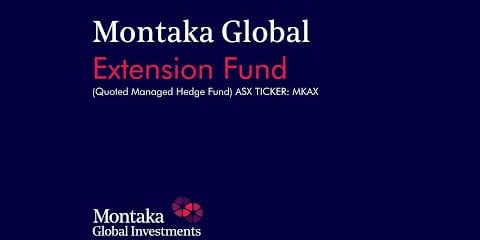
The Fund is highly focussed on investing in long-term winners in attractive transforming markets when they are undervalued and offer outsized return potential.

An ASX-listed Active ETF investing in 20 to 40 of the world’s best global stocks

An ASX-listed Active ETF investing in 20 to 40 of the world’s best global stocks and hedge returns from currency movements
UMAX aims to generate attractive quarterly income and reduce the volatility of portfolio returns by implementing an equity income investment strategy over a portfolio of stocks comprising the S&P 500 Index. UMAX does not aim to track an index.
The Global X Nasdaq 100 Covered Call Complex ETF (QYLD) follows a “covered call” or “buy-write” strategy, in which the fund buys the stocks in the Nasdaq 100 Index and “writes” or “sells” corresponding call options on the same index to generate income over and above dividends.
The Global X S&P 500 Covered Call Complex ETF (UYLD) follows a “covered call” or “buy-write” strategy, in which the fund buys the stocks in the S&P 500 Index and “writes” or “sells” corresponding call options on the same index to generate income.
The Montaka Global Extension Fund – Complex ETF (ASX: MKAX) is highly focussed on investing in long-term winners in attractive transforming markets when they are undervalued and offer outsized return potential. The Fund also short-sells single stocks and ETFs to make additional investments in these winners with the proceeds and as an absolute profit centre.
The fund aims to provide investors with the performance of the S&P Global 1200 Healthcare Sector IndexTM, before fees and expenses. The index is designed to measure the performance of global biotechnology, healthcare, medical equipment and pharmaceuticals companies and may include large-, mid- or small-capitalisation stocks.
The Fund aims to provide investors with the performance of an index, before fees and expenses. The index is designed to measure the performance of 50 ASX listed stocks that offer high dividend yields while meeting diversification, profitability and tradability requirements as well as being screened for sustainability considerations.
HETH aims to track the performance of an index (before fees and expenses) that includes a portfolio of large global stocks identified as “Climate Leaders” that have also passed screens to exclude companies with direct or significant indirect exposure to fossil fuels or engaged in activities deemed inconsistent with responsible investment considerations. HETH currently obtains its investment exposure by investing in the Betashares Global Sustainability Leaders ETF (ASX: ETHI), with the currency exposure hedged back to the Australian dollar.
ETHI aims to track the performance of an index (before fees and expenses) that includes a portfolio of large global stocks identified as “Climate Leaders” that have also passed screens to exclude companies with direct or significant exposure to fossil fuels or engaged in activities deemed inconsistent with responsible investment considerations.
EMKT invests in a diversified portfolio of large and mid-cap stocks from emerging markets countries. EMKT aims to provide investment returns, before fees and other costs, which track the performance of the Index.


