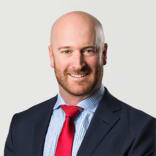
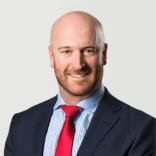
Joining us from Oriana, we have Marcus Cleary, Head of Distribution, and Michael Swinnerton, Senior Development and Portfolio Manager.
Marcus has a responsibility for capital raising and sales, and has had similar roles with Australian Unity, Chadwell Hall, Macquarie Bank, and UPS.
Michael heads Oriana's early education division, and has successfully delivered over 40 centres, and is currently managing a pipeline of more than 70 childcare projects.
Today they'll talk to us about why not all income is created equal and how Oriana's integrated approach to investing in early education assets can deliver resilient, income-focused outcomes for investors.
Over to you guys.
Thanks Darren, thanks for the opportunity to present today.
As you mentioned, we're going to be talking about the early education, sorry, within the direct property sector.
And a few things that we're going to touch on just to set the scene is the fixed income-like income that is provided and or profile that's provided from early education vehicles.
The inflation hedge that is connected to that,
So the CPI increases with rent payments, the capital upside participation that you get from this particular sector, unlike some of the other more traditional fixed income sectors, and the downside protection that this asset class can deliver due to that CPI growth that I referred to, but also the government backing from the rebates from childcare sector
payments, the non-discretionary type of asset that it is as well, in that regardless of the economic environment, we're still sending the kids off to the childcare centre at the start of the day.
Volatility is a pricing problem, not a cashflow problem.
There's a lot of sentiment that comes with volatility in the market, whether it's recent things like tariffs and trade tensions, tech sell-offs, oil shocks is another most recent one.
We find that the price volatility of that and the breadth of that volatility
isn't seen within the direct asset class.
And one of the reasons for that is the cash flows that we deliver are linked to that CPI bit and continue on.
So within investment markets, there is different sorts of income that come through and it's not always equal.
With structural types of income, they're typically backed by very long-term leases for the property, so 10 years in excess.
They're often CPI linked, so the rental payments into the property is locked into contracts for that kind of 10 years.
And we have, or that asset class has
lots of non-discretionary benefits to it as well.
And I'd already discussed that.
One of the examples that potentially could be used there is even in COVID, childcare centres remained open for essential services workers, and they were often quite full through that period of time as well.
So a defensive real asset backed by a non-discretionary demand.
I had touched on this earlier as well.
The government rebate for childcare centre payments has continued and potentially will continue with bipartisan support.
That does put a floor on the value of those assets which aren't marked to market on a daily basis like the listed market.
As mentioned, they are non-discretionary, meaning that one of the last things that a family will take out of their budget would be a childcare payment, particularly if parents are working through a big economic downturn because they need their kids to be looked after during the day when they can head into the office.
The long lease structure also helps with the longer term benefit and that cash flow piece.
So companies that are renting a childcare centre are renting them for long periods of time, typically with ongoing restructure as well.
So it could be a 10 year lease with two options to renew for five years and five years.

So I'll give a bit of a
bit of an upshot as to how the Oriana integrated model works.
I believe we touch on this afterwards as well but obviously Oriana and Aspire represents a partnership type arrangement and the benefit of that is you get the full life cycle control.
between the two parties where on the Oriana side, which is the development side, we have a lot of IP and we do a lot of thorough analysis at the site selection phase.
So we have well-established relationships in the development sector with a lot of the major land developers that build our master planning communities around Victoria and all around Australia as well.
And the benefit of that is that we are offered superlots and sites that are conducive to childcare centres, typically off market.
And what we do when we get those as well is that we do full demand analysis on those.
So we look at incoming population, current population, incoming competitors, where the nearby childcare centres are that are operating or have planning permits as well.
And we also look at things like the road network, other amenities in the estate as well, whether there's schools or whether there's retail, that also helps drive demand for childcare.
So with all that information, with that analysis, we can make sure that we are choosing a site that is conducive to a very strong
in the next couple of years, but in many years to come, particularly those that are in protected master plan communities where not every lot can be a childcare centre, for example.
So we're not a tick and flick type developer with childcare operators.
It's in both of our best interests that we find a site that will work and have strong demand for 20 years to come.
So once we, going back to the life cycle, once we find that site, again through all of our IP and through our construction capabilities as well, we can complete due diligence on a site relatively quickly and a feasibility as well.
We understand what these construction
what the construction costs are pretty accurately because we're delivering so many at the same time as well.
So we can move through the development relatively efficiently and quickly and understanding the risks as well because as we're
from a design point of view, from a feasibility point of view, we do have a lot of IP and we work quite closely with a lot of the municipal councils as well.
So we do
We implement all that on the developer side, but also with the input that we've built over the years from Aspire, understanding how the operation works.
So we'll add in Piazza's, we'll add in new industry initiatives, such as how playgrounds work, consolidated playgrounds, down to types of joinery in the centres as well, to make sure that we are delivering a strong outcome in a couple of years' time when it is delivered.
And then how that sort of integrates within the fund and how typically fund through models work is that then the Oriano or the developer side obtains a planning permit through working with council.
And then once that permit's obtained, then the fund kicks in.
So that's when settlement of the land would be once that department risk has been controlled and mitigated.
But
Back to the lifecycle, from that point forward when we get a planning permit then it's full steam ahead into construction using our in-house IP and all the way from in-house drafting through to our in-house site form and it's delivery and we deliver it as fast as we can and as good a product as we can given we all have that vested interest to have a well operating sense for the next 20 to 40 years.
Given we are integrated between the construction development and Despire, we are all operating with the same interest and the same aim.
At the end of the day, it is a well-functioning, well-operating centre that will survive the test of time.
The lease is pre-committed before the fund acquires.
That's pretty straightforward.
The build cost is relatively fixed and we know what the build cost will be when we acquire the site because of all the IP.
We have direct connections with our construction team so we get live data on what construction costs are and we get efficiencies through the volume as well.
Right of first refusal, so with the relationships that we have with these land developers, often we pursue a first right of refusal over the estate as well for a number of years, which ensures that we protect that centre that we are developing, but also so that we can time the next acquisition for when there will be demand for the next centre to pop up as well, particularly in the larger states that have many thousands of houses.
And that last point there is, you know, we have a direct connection with Aspire.
We get live feedback from the centres almost daily, you know, from if there's a leak to how parents want to orient the couches in the meeting rooms.
We get that direct feedback daily, which we then incorporate into our designs and then into the next transit projects.
Just a bit of an introduction to Aspire itself.
So Aspire, it was only probably five years ago that we had probably a handful of centres operating across Victoria only, and over the last five years since, we've grown to, it's about 43 today, operating centres, and that's Australia-wide as well.
Aspire have, they've got their,
their model sort of down pat in the way that they integrate with their local community and the master plan communities and also how they work with their staff in ensuring that staff have succession and that they help the growth of the brand as well.
So in terms of the statistics there, so across the portfolio, there's a 95% occupancy rate on average, which is quite high compared to industry standards.
There's a lot of
There's a lot of reporting at the moment on other operators in the sector as well.
And that sort of 70 to 75% average is pretty prominent in a lot of that literature that is out there at the moment.
So I said 43 before, but we've got 41 there.
open when you get licensed or when we deliver them to Aspire, but we're around that range.
And we have 60, it's probably more like 70 active projects now around Australia, mostly in Victoria, but yeah, a handful in South East Queensland.
a handful in New South Wales that are currently being delivered.
We're just about to open our first New South Wales centre in the coming week or so and then we've got a few in WA as well.
So these are the seed assets that we have identified for the fund.
in its initial rollout.
So we've identified a site at Inmana Lakes, Mount Deneid, Clyde North, Berwick and Wollan.
Each of these you'll note represent growth areas around Victoria, which again is very much our model.
and now Bread and Butter.
So a few of those, actually all those sites are all within master plan communities from the likes of you've got Stockland, Mervac and Villawood there.
A lot of those centres as well are adjacent if not near education precincts.
So there's a very direct relationship between say primary schools and childcare, particularly when young families have
You know, they'll have an infant, but they'll also have a child who's a little bit older and able to go to school.
So you get joint drop-offs and pick-ups and all that.
So they complement each other really well.
We are able to progress these project programs relatively quickly to the extent we're able to have a centre operating within 18 to 24 months of acquiring or settling on the site.
Thanks, Michael.
And now we might just take a little bit of a look at some of the key terms or terms of the vehicle.
The distributions are paid on a quarterly basis.
Redemptions, there is a 24-month lockup.
post application, then with annual liquidity windows, a very low, less than 40% loan evaluation ratio.
The fees on the vehicle is a management fee of 80 basis points with a performance fee of 20% over the 10% target return.
The target return is made up of five and a half percent annual yield target and the minimum investment, which is worthy of noting as well, is $50,000.
So Oriana is a hands-on investment partner.
So we've completed 67 investments to date with investment GRV of $1.3 billion.
And we currently have about 18 billion under management and in the advice space as well.
And a little more broadly, as a fund manager, asset manager in Australia, we do cover other funds aside from the Early Education Fund.
We also have a professional partners fund, a protected income fund and a real income fund.
And these vehicles are across several of the asset class sectors, including a multi asset vehicle that's managed out of Hong Kong.
Gentlemen, thank you very much for that overview of the Orellana's approach to early education assets.
The integrated model seems to be one that delivers a substantial number of benefits for investors.
Marcus, you've drawn a clear distinction between market price and structural income.
For wholesale investors building a portfolio today, where does early education assets sit relative to some other opportunities like private credit or unlisted property?
Yeah, great question.
And for investors that are putting together a more balanced portfolio and answering it really directly straight off the bat, it's right in the middle.
It is considered still an unlisted property asset, but it does have some very defensive characteristics because of the things we spoke about earlier in regards to CPI linked, government backed, inelastic demand type.
characteristics, unlike say a more private credit vehicle that would be distributing potentially a similar amount of income but wouldn't necessarily have the same potential upside that the direct property asset in early education would have, albeit in a more protected manner than your typical unlisted property vehicle.
Thank you, Marcus.
Michael, maybe if I could just throw it over to you.
Early education assets are often described as defensive, but outcomes can still vary significantly.
In your experience, what are the key execution decisions that actually determine outperformance?
I think it comes down to site selection is probably one of the biggest matters, as well as that integrated model we have with Aspire as well.
A lot of that does come from that.
that model that we do, that we have established with them as well.
So again, site selection, you can put a childcare, you know, particularly if you're not in controlled areas, you know, say for in metro areas, for example, you can deliver childcare on any corner.
and you will often see areas where there are lots of child cares next to each other.
And so while you have a well presenting asset there, you might have a good operator in it, being able to actually fill that childcare centre and have strong occupancy is definitely a risk.
So there's a lot of importance on the initial site
protections in the years to come and it is in an area where there is justified demands and that you are co-located with other demand drivers as well to really protect the asset for long-term occupancy.
Yeah, that's probably that's one of the key things.
And then obviously, then the integrated model as well.
So you can again, you can go and deliver a centre without any sort of connection or thought for the operator at the end as well, which, you know, we come across sites with planning permits all the time.
And they're often designed for the sake of getting a planning permit to the point where that planning permit has no value, because we can see and we understand
you know, design requirements, even building siting requirements and alike that do make massive differences on
when the kids do start joining the centre.
So, you know, to the point where we have, you know, there might be rooms that aren't laid out functionally, they've got the wrong number of carers in the rooms, the car park's in the wrong location, the site entry's away from the car park.
So there are a lot of speculative developers in the space and, you know, if these centres do get delivered, functionally they're just, they don't work and, you know,
only do they want very good care by a very strong brand, if the site's not designed conveniently for them, if it's a poor presenting building as well, they are less likely to want to put their kids in these centres.
So that constant feedback that we can get from Aspire, that live daily feedback that we get from them,
really makes sure that we are delivering an asset that is suited to the operator and it will impress families and it will welcome them in and they're more likely to stay through the course of their child's development as well.
So those are probably the two biggest things is site selection and just really understanding the operator.
I think ensuring that you have happy parents with happy kids makes happy operators and ultimately happy investors.
Yeah, that's it.
Marcus, Michael, thank you very much for those insights on Ariana's integrated approach to early education assets and how they can help investors counteract some of the volatility that we're seeing on listed markets at the moment.
Thank you very much for your time.
Thanks Darren.
Thanks Darren.
Why integrated real assets are built for uncertain markets
Marcus Cleary and Michael Swinnerton from Oreana - Investor Webinar March 2026
About this presentation
Marcus Cleary, Head of Distribution, and Michael Swinnerton, Senior Development and Portfolio Manager at Oreana, join the March Investor Webinar ‘Finding Value in Volatility’ to present a comprehensive view on early education property as a resilient investment. Marcus outlines the sector’s defensive income characteristics, including CPI-linked rents, long-term leases, and government-supported demand, positioning it as a stable, non-discretionary asset class. Michael then takes investors inside the engine room, explaining how disciplined site selection, integrated development, and operational expertise drive consistent outcomes.
Together, they highlight how strong execution and asset quality underpin performance, with high occupancy rates and carefully managed risk. Their combined message is clear: when backed by rigorous processes and structural demand, early education property can deliver both stability and long-term value.
Disclaimer
- The presentations made during this seminar are for informational and promotional purposes only.
- Any comments made or information provided does not consider the appropriateness for you having regard to your particular objectives, personal/financial situation and needs. Before investing you should consider independent professional financial advice.
- No comments made or information provided constitutes advice, an invitation, or an offer to buy any security or other financial product or engage in any investment activity.
- All securities and financial products involve risks.
- Past performance of any product is not a reliable indication of future performance.
- Read carefully the governing documents of a product’s offering such as its PDS or information memorandum.
- InvestmentMarkets does not vet, endorse or recommend any product the subject of the presentations and is only facilitating the exposure of the product.
- These presentations were made as at March 2026, and therefore relevant facts, the economic environment , governing documentation and the law upon which they were based may change after that date such that the accuracy and reliability of their content may be affected.
Featuring

More Videos








