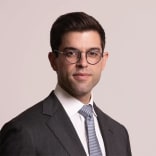
Our next presenter is George Haja.
Chief Investment Officer at Bristol Moon Capital.
George is an investor with over a decade of buy-side experience who most recently worked at a hedge fund in New York for five years.
His presentation topic today is the case for investing globally, unlocking greater opportunities beyond Australia.
Welcome to the presentation, George.
Thanks, Angelina.
So, yeah, today on the agenda is I'll talk a little bit about Bristol Moon and who we are.
I'll talk about why it makes a lot of sense to look beyond Australia's shores and why to invest globally, providing a few case studies along with that.
And then we'll look at how Bristol Moon approaches this and how we look for mispriced quality businesses.
So, you know, we're a Sydney-based equities firm and we invest in a global portfolio of
10 to 20 core investments and we really seek to invest our capital and concentrate it in our very best ideas and our goal is really to compound our investors capital at the best rate possible over the long term and we also have a very keen focus on downside protection.
Worth noting that we also publish an investment newsletter where we document our research.
These are like 30 to 70 page deep dives on stocks so you know feel free to check that out.
I co-manage the portfolio with Daniel Wu.
And, you know, the Bristlemoon team has, you know, 18 years combined experience at investment firms.
So I was previously at Montica was, you know, I was the one who moved over and helped set up their New York office and was based there for five years before launching Bristlemoon.
And so, you know, the fund is off to a pleasing start.
We've generated 22% returns net of fees in the eight months since we've launched the fund.
But onto the interesting stuff, you know, Australia, it's a small pond, you know, it represents less than 2% of the global stock market.
And if you think about the global stock market, it's valued at over $120 trillion.
And the US alone accounts for 50% of that.
Now in contrast, the Australian stock market capitalization is tiny, it's it's around 2 trillion.
And so it's a fraction of the global opportunity.
But when you start to dig
beneath the surface, the ASX is dominated by banks and mining companies.
They comprise around 50% of the ASX 200.
And so what the Australian market lacks is significant exposure to sectors like technology, healthcare, consumer brands, other growth sectors.
And so don't get me wrong, Australia has some fantastic companies.
I'm not trying to sound unpatriotic or anything,
The fact is that most investors know about these companies.
And if you consider the large pool of investable capital, and that includes superannuation money, it's chasing a very small basket of quality businesses.
I think it's really important to remember this rule of thumb when investing, and it's that the higher the price you pay, the lower the prospective returns.
And so
If people are overpaying for these quality businesses because there aren't a sufficient quantity of them to deploy the huge sums of wealth into, those stocks get expensive and it often means that the returns that investors can expect from them are lower.
And so we think that it makes a tonne of sense to look beyond Australia's shores.
And part of the reason in doing that is that there's just a deeper pool of opportunities.
There's many high quality businesses that exist globally.
And what investing in global stocks allows is access to industries that don't exist in Australia at scale.
These are things like semiconductors, cloud computing, electric vehicles.
Another point I would note is that
there are many quality global businesses that actually trade at a valuation discount to the quality businesses in Australia.
And one other consideration is that, you know, if you invest globally, you actually reduce your overall portfolio risk by diversifying away from Australian specific risks.
And these are things like, you know, the commodity cycle, the risk of a domestic economic downturn.
Maybe just one final point of note,
is that the Australian dollar tends to weaken in terms of turmoil.
And so holding offshore assets can act as a hedge.
It's maybe worth bringing some of this to life with a few examples of thoughts that we hold in the Bristol fund.
And so, Parr Technology Corporation, they're a leading technology provider in the enterprise restaurant space.
And so Parr is in roughly half of the top 100 restaurants in America.
And these are very big chains like Burger King, Wendy's, Arby's, Dairy Queen, you know, restaurants that people, they're basically household names.
And so what the company is doing is they're offering a point of sale software system, as well as loyalty and online ordering modules.
And that's all part of this unified platform that is allowing part against share from incumbent legacy point of sale solutions.
And so the company's really
selling a mission critical product into a highly durable customer base.
And we've published a deep dive on the company if that's of interest and you want to check it out.
But this is all really transforming and manifesting in a really strong growth profile.
And so back in 2018, the annual recurring revenue of par was just $11 million.
Since then, it's grown to 276 million today.
That's a 25x increase in just six years.
Now, the point I'll make is that there was a similar point of sale company to PAR in Australia.
It was called TASK.
TASK was acquired by PAR last year.
There are now no publicly listed companies in Australia doing anything remotely close to PAR.
It's really challenging to invest in the theme of software integration within these enterprise restaurant chains without looking internationally at companies like PAR.
Second example, another stock we hold in the portfolio is Hemnet.
Now, Hemnet is the realestate.com.au of Sweden, but it is even more dominant.
You know, they're a monopolist with 90% share of listings for properties sold in Sweden,
And we're forecasting that Hemnet should be able to grow revenues by potentially north of 50% this year, with profits growing even faster than that.
Now, if you think about REA Group, the Australian property portal, they're expected to grow revenues at just 16% this year.
Despite Hemnet growing demonstrably faster than REA and having a more dominant market position, REA still trades at a 20% valuation premium.
And the last stock I'd note is PDD.
You've probably all heard of Temu.
PDD, they're a China-based e-commerce platform that owns Pinduoduo and Temu.
And the growth in this company is just phenomenal.
They're the fastest company in history to achieve 100 billion of market cap.
And they reached that milestone in just five years.
Now, despite
An incredible growth profile, the company is growing its profits at almost 50% year over year, it trades on a cash adjusted PE of just 6.5 times.
The reason why I bring these case studies up is to show that there are some incredible opportunities offshore that really supports the case for investing globally.
So how are we at Bristlemoon taking advantage of these global opportunities?
Well, we've
assembled a portfolio of idiosyncratic global quality businesses that we believe are mispriced and we have strict return thresholds and require a quantification of each opportunity.
So we basically want scenarios where if things go well and in our upside case we can hit a five-year triple which kind of backs you into a 25% IRR.
And you know what does our investment process look like?
Well we do deep
fundamental research on companies and we aim to know about the businesses we own more than other market participants.
We're really trying to build an informational edge about the businesses we own and trying to identify the long-term winners.
We also have a very strong focus on downside risks and we're trying to find positively asymmetric opportunities where we can't lose much.
And so we stick within our circle of competence
We really only invest in what we know and where we think we have an edge because Daniel and I, we don't want to be taking stupid risks when managing the portfolio because we have all our investable net worth in the funds alongside clients.
So, you know, there's perfect alignment.
Now, if you're interested in the fund, please reach out and I'm happy to have a call.
I'd be honored to manage wealth on your behalf.
George, when investing globally, how do you narrow down the investment universe to a portfolio of 10 to 20 stocks?
Yeah, I mean there are thousands of companies out there and there's only so many hours in the day to look at those companies.
I think what's important is to have very carefully defined criteria around the sorts of businesses you want to invest in.
And we know what the perfect company looks like for Bristol Moon.
You know, these are businesses that have assets that are hard to replicate, are highly defensible, and get even stronger as the business scales.
So you know, we look very carefully at things like the unit economics of businesses.
And we really focus our research efforts on businesses that have very profitable growth, and earn very high returns on invested capital.
And
Just from looking at these sorts of businesses over time, Bristol Moon has built up a bench of stocks that we've followed for many years, but we're just waiting for the right price to buy that stock.
And so, you know, we're very disciplined and we want to make sure that we're buying things at sensible valuations where there's a margin of safety.
So what I'd say is we know the stocks we ideally want to own.
We know the price at which we'd want to enter those opportunities.
I think that bench of stocks really helps us narrow down that investment universe to a smaller basket of very high quality businesses.
And then it's just a matter of judgment as to what price it would make sense to purchase those stocks and whether the risk reward stacks up against the portfolio that we already own.
And that's a very high bar because
We love the businesses that we own in the portfolio today and think they're significantly undervalued.
Do you find it is an advantage being a smaller fund with the ability to look at smaller companies?
Yeah, so I think there's sometimes a conflict between what's good for the investment manager and what's good for the client.
And having more assets under management is better for the investment manager.
But the risk is that the fund gets to a size where it can no longer invest in smaller companies
even if they're highly compelling investment opportunities.
And the reality of that is simply mathematical.
And if you consider a $10 billion fund that really likes a stock, and they want to make it 5% of their portfolio, well, if they don't want to be more than 10% of the shareholder register, then the smallest company they can invest in to achieve that position is a 5 billion market cap stock.
And so basically, the bigger the fund, the bigger the companies they need to invest in to move the needle
And that can cause larger funds to forego really great investment opportunities simply because those funds are too large to invest in those smaller stocks.
And for smaller funds like us, that can create some pretty compelling opportunities in that 500 to 5 billion market cap range where we have no issues to get into those companies.
And they might be opportunities that are shunned by some of the mega funds.
And I think in that smaller space,
The advantage of those companies is that they're less followed than large cap stocks are.
And by virtue of their smaller size, they can have a very long growth runway that it's unburdened by the law of large numbers.
Thanks for your time, George.
Thanks, Angelina.
Pleasure.
The Case for Investing Globally: Unlocking Greater Opportunities Beyond Australia
About this presentation
In this presentation George Hadjia from Bristlemoon Capital discusses the case for investing globally and unlocking opportunities beyond Australia.
Wholesale Investors Only
The product(s) mentioned in this presentation is available to wholesale investors only. It is not applicable to or appropriate for retail investors.
Disclaimer
- The presentations made during this seminar are for informational and promotional purposes only.
- Any comments made or information provided does not consider the appropriateness for you having regard to your particular objectives, personal/financial situation and needs. Before investing you should consider independent professional financial advice.
- No comments made or information provided constitutes advice, an invitation, or an offer to buy any security or other financial product or engage in any investment activity.
- All securities and financial products involve risks.
- Past performance of any product is not a reliable indication of future performance.
- Read carefully the governing documents of a product’s offering such as its PDS or information memorandum.
- InvestmentMarkets does not vet, endorse or recommend any product the subject of the presentations and is only facilitating the exposure of the product.
- These presentations were made as at 25-27 March 2025, and therefore relevant facts, the economic environment , governing documentation and the law upon which they were based may change after that date such that the accuracy and reliability of their content may be affected.
Featuring

Tags
More Videos


