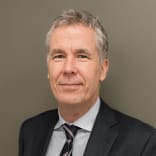
Presenting now is Tim Slattery, Managing Partner at ASA Real Estate Partners, a specialist Australian real estate private equity manager.
Tim was CEO at APN Property Group before the sale of that business to Dexus in 2021, after which he established ASA.
Today, Tim is going to present on the ASA Equal Living Social Infrastructure Fund.
Look forward to having you on board and hearing what you have to say.
Over to you, Tim.
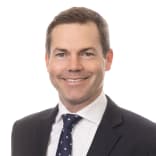
Thanks very much, Darren.
And thank you, everyone, for tuning in.
I thought it'd be worthwhile starting just with a bit of brief background on ASA Real Estate Partners, our company.
Our founders together have about 90 years of experience.
So although we're a relatively new manager, we've all been doing this for a very long time.
And a significant portion of that has been working together.
Our average investor return over the period of time that the three of us as the founders worked together was a net equity return of 24.5% per annum, which would place us right up the top of the best performing managers for what we do over the period of time.
We've been together, we built our business up previously, as Darren mentioned, to about $3.8 billion of assets under management.
And today the business has an independent board and we also have a manager balance sheet, which sits at around $50 million.
We're a strong co-investor in everything we do.
And this balance sheet commitment is part of our alignment, and also provides investors with a high degree of alignment and skin in the game from the manager.
ASA is owned by myself, Alex Abel and Chris Aylward.
Chris was the previous chairman and major shareholder at APN, and Alex and myself worked together for a number of years at APN Property Group, which a number of you may be familiar with.
Today, ASA Real Estate Partners manages just under $600 million of assets.
We have a team of 12 and a portfolio of six properties and over 150 tenants.
So turning to the ASA Equal Living Social Infrastructure Fund, we've been working on this opportunity for the last two years, and we strongly believe it provides a very compelling and different investment proposition for wholesale investors looking at a real asset exposure in the Australian market.
The fund will acquire three step-down healthcare assets and also provide further capital to enable the growth of the equal living business.
We'll talk more about these assets shortly, but we have a new portfolio with three completed assets plus further growth.
The assets benefit from 20-year triple net leases with annual CPI increases, and our tenant generates nearly 100% of its revenues from long-term government funding programmes.
The assets themselves provide exceptional value to the taxpayer, costing the government up to 70% less than the equivalent cost of a healthcare bed in a hospital per night.
There's also a significant shortage of this type of accommodation sitting between a private or a public hospital bed and the homes that people that are in the situation would otherwise be living in.
It's estimated there's about 15,000 places that are required in addition over the period of 2033, around $15 billion of capital.
So it's a significant opportunity.
The assets in the fund will be owned by investors and investors will also have the benefit of participating in the growth of the operator through an equity stake which will give us ownership of up to 30% of the tenant.
The fund has a target cash distribution yield of 7% per annum and a total return target of 15% per annum over its five-year investment time frame.
Turning a little bit more to the assets and the problem that they solve.
A critical problem in Australia is the issue of hospital bed block.
So on estimates around the country, about 8 to 10% of all hospital beds are occupied by patients, by people that really shouldn't be there.
They should either be in residential aged care or they should be living in a lower cost form of accommodation.
Now these people can't live long-term in hospital, nor can they live at home.
So this model, step-down healthcare, if you will, provides a key solution to that issue of hospital bed block.
The issues of that challenge include an ambulance ramping, delays in elective surgery, and also a significant cost overrun for the federal and state government healthcare systems.
So the sorts of people that will be looked after in the assets in which we're investing include those with life changing physical injuries and complex care needs.
These people include those with paraplegia, quadriplegia, acquired brain injuries, strokes, cerebral palsy, MS, MND, severe forms of epilepsy.
The assets provide both accommodation and care to these people.
If you happen to be one of these people, in Australia it's affected by one of these conditions, and you've been discharged from hospital, you really have three options.
You can go to a freestanding house, which is typically a shared house on the outskirts of town.
Often these assets are a relatively long distance away from friends and family, and they often have inferior amenity.
So they're further away from key services, such as healthcare, shops, public transport.
They're also in a shared situation.
So as a patient, you are sharing with often a person that you don't know, and that can change from time to time.
The second alternative is high density apartments where you have this type of accommodation in a salt and pepper type of apartment.
structure throughout the apartment complex.
Often these assets haven't been purpose-built.
They don't necessarily have the economies of scale and the care provision that is available in purpose-built accommodation.
And often patients or participants report discrimination from others living in those apartment buildings for people that are often in wheelchairs in high care needs.
So the Equal Living Group model was designed from the ground up, purpose built, offers independent living in terms of apartments, but also a very high level of care with 24 hour a day, seven day support on site.
They also are well located, being close to public transport, schools, shops, healthcare.
The assets are in Preston, Werribee and Dandenong in metropolitan Melbourne, being well located with high walk scores, giving a strong indication of their amenity.
Our tenant, The Equal Living Group, is a business that has a long track record and is well established.
Hiram Ingot's founder and CEO has a long track record and it was previously a successful aged care operator before selling his aged care business, Blue Circle, to the Royal Freemasons Group for $30 million in 2015.
The business has 12 head office staff and over 150 care professionals within the business and provides a range of services, both developing, owning and operating these assets.
The design of these assets themselves is one of its key strong quotes.
We've spoken a little bit about the location of the assets, but in addition, the design is significant.
On the slide here, you can see it's very carefully constructed and designed.
You have allied health on the ground floor.
That's typically a physiotherapist, occupational therapist, speech therapy and other allied healthcare services.
Levels one and two comprise short to medium term accommodation.
That's people coming straight from hospital, typically for up to 90 days.
And the upper two floors are long term accommodation where people can live long term independently, but accessing the care and support from the other services on the lower floors.
This model has been particularly successful with three existing assets generating high levels of occupancy and providing high levels of care.
We can see the operating performance of the business and the assets because they are up and running and in operation today.
You can see some examples of the assets here on the slides.
They're delivered to basically a four or four and a half star hotel standard.
You can see they offer wider circulation, oversized apartments.
Typically a two bedroom apartment is around a hundred square metres.
And they're built with all the integrated care supports with call buttons, duress systems, additional supports in terms of accessible bathrooms and common areas.
The seed portfolio is up and running and provides a range of accommodation options across the short term and medium term and longer term accommodation.
There's a significant shortage and these assets are all well located close to their particular catchment areas and are all completed.
The business will also be in a position to continue its further growth.
There are a series of sites that have been identified and part of what the fund will do is provide capital to enable the scaling up of the business, again, in key strategic locations, offering strong underlying demand from their patient populations and also close proximity to key health care services.
The next asset of the existing three asset portfolio is located in Heidelberg.
This is just opposite to the Austin Hospital, the second largest healthcare precinct in Victoria, behind Parkville, and also one that experienced a significant issue with bed block and ambulance ramping.
You can see here on the slide, the design of the asset, which is a slightly larger profile, but offering the same level of accommodation.
A key risk that we have looked at as part of our analysis on the opportunity is the funding risk.
The assets are funded through long-term government programs, which include the TAC, WorkSafe, a variety of state and federal healthcare programs, also including a core component of the NDIS.
While there's a key issue with hospital bed block, it's also important to note that the SDA or the component of the NDIS that is going to provide the healthcare service or the healthcare accommodation service, I should say, sits around 1% of the overall NDIS budget.
In addition, our analysis indicates that amongst all of the care provision of the NDIS, previously of 100 providers, only around 5% have been registered.
The Equal Living Group is a registered provider and has recently undertaken an independent 300 point audit.
which it's passed with flying colours and is able to offer a very high level of care and a level of confidence to these patients and their families.
In terms of the funding sustainability, it's also critical to note that the care outcomes are able to be provided by the private sector at a materially more cost effective price point than the public system.
Here, the average cost of a hospital bed can cost anywhere from $2,000 to $5,000 tonight.
The equivalent cost per night sits around $1,000 for this step down healthcare accommodation.
This is significant as government budgets remain under pressure and providing strong value for the taxpayer is a key part of our investment thesis.
It's also worth noting in terms of the NDIS component of the investment that there are significant changes that are already being made to the NDIS which will not affect our view on the long-term funding sustainability of this model.
As an example, the NDIS has included over 300,000 children that are suffering from autism and developmental delays such as ADHD.
Those people will be funded separately and separate to the long-term high complex needs physical support that these assets provide.
A lot of the patients and the participants in these assets need 24 hour care, including things like feeding and being changed, being turned over in their beds on a nearly hourly basis.
The alternative for most of those high acuity patients is to go back into the hospital, which provides us a high level of confidence that this funding will remain robust for the long term.
Taking a step back from the investment and where we see this type of asset relative to other investments in the market tells an interesting story.
The yields on offer sit at around that seven to 8% yield on cost range.
This is to a profitable tenant, their breakeven underlying occupancy sits at around 56% compared to aged care or child care at nearly 90%.
So we have a profitable underlying business and indirectly the business benefits from nearly 100% government backing in terms of the source of its revenues.
When we compare that against aged care, co-living, purpose-built student accommodation, childcare and other areas that we can invest into real assets, that provides a very attractive dynamic and a very attractive risk profile.
We have made with APN and our background some of the best returns on investing into alternate sectors.
So national storage in the self storage based generation healthcare and the healthcare space, service stations and even industrial real estate.
When yields started high at a relatively high level before institutional capital had come in and repriced these assets.
We see a lot of those parallels with this sector.
while it's also providing a strong community need and a very strong social outcome by helping the issue of hospital bed block, improving the quality of life for participants in these assets and also providing a strong degree of capacity building.
So it's very much got this social impact aspect to it, as well as what we see as an attractive risk adjusted return profile.
In terms of the return profile, I wanted just to step through how we see the returns.
We see of our 15% target total return over the five-year period, approximately 7% is coming through our target cash distribution yield and a combination of the growth in the existing assets, annual rental growth through our CPI increases, as well as profits from the additional capital we will deploy into the growth of the portfolio driving our overall returns.
One thing which also sets this investment apart is because we are providing a whole lot of capital to enable the growth in the business, we've also negotiated equity participation in the tenant operator, the Equal Living Group.
That equity participation comes at nil cost and provides an opportunity subject to the deployment of that capital into the real estate.
to hold an equity interest of up to 30% in the operating company, which we think provides additional return potential for fund investors.
So we see this as not only a great investment to deliver positive, very positive social community benefits in terms of helping the people that are otherwise unable really to be looked after, those at home or that cannot be looked after long-term in hospital, but it also provides a very attractive risk adjusted return profile delivered through the infrastructure assets and the hard assets that sit behind the investment, but also with the equity participation in the operator.
Thank you for your time in looking at the investment.
If you're interested to learn more, please feel free to review our slides, our information memorandum, or contact us and we'd be pleased to discuss the investment with you.
Thanks for your time and good luck investing.
Thank you, Tim, for a very interesting investment thesis and good to see an opportunity that also presents some social benefits to Australia and Australians.
Thanks very much, Darren.
Great to be with you.
Equal Living: The infrastructure built for better outcomes in 2027
About this presentation
Tim Slattery, Managing Partner at ASA Real Estate Partners, presents the ASA Equal Living Social Infrastructure Fund, an opportunity in step-down healthcare real assets. Hosted by Darren Connolly, this November 2026 webinar explains how the fund aims to address the issue of hospital bed block through purpose-built social infrastructure.
Tim explains that around 8 to 10% of Australian hospital beds are estimated to be occupied by patients who could be cared for elsewhere, contributing to ambulance ramping and elective surgery delays. Tim outlines the funding case, noting that a night of step-down care costs around $1,000 compared with $2,000 to $5,000 for a hospital bed, and he ALSO addresses the key sustainability of government funding.
The fund is due to acquire three completed, purpose-built step-down healthcare assets in Preston, Werribee and Dandenong in Melbourne. The Assets are leased to The Equal Living Group on 20-year triple net leases with annual CPI increases, and the tenant generates nearly all of its revenue from long-term government funding programs, including the NDIS, TAC and WorkSafe.
ASA Real Estate Partners is led by the former APN Property Group team, manages just under $600 million in assets and has a manager balance sheet of around $50 million co-invested alongside investors.
Disclaimer
- The presentations made during this seminar are for informational and promotional purposes only.
- Any comments made or information provided does not consider the appropriateness for you having regard to your particular objectives, personal/financial situation and needs.
- Before investing you should consider independent professional financial advice.
- No comments made or information provided constitutes advice, an invitation, or an offer to buy any security or other financial product or engage in any investment activity.
- All securities and financial products involve risks.
- Past performance of any product is not a reliable indication of future performance.
- Read carefully the governing documents of a product’s offering such as its PDS or information memorandum.
- InvestmentMarkets does not vet, endorse or recommend any product the subject of the presentations and is only facilitating the exposure of the product.
- These presentations were made in November 2026 and therefore relevant facts, the economic environment, governing documentation and the law upon which they were based may change after that date such that the accuracy and reliability of their content may be affected.
Featuring

More Videos