What Stability Means in an Unstable World

Shelby Clark
Wed 4 Feb 2026 6 minutesFor a long time, stability was something many people barely thought about.
If you stayed employed, avoided major mistakes and made reasonably sensible decisions, the system tended to reward you. Careers progressed in a fairly linear way. Property values rose over time. Superannuation ticked along quietly in the background. There were cycles, of course, but they felt familiar and manageable.
That assumption has quietly fallen apart.
Over the past decade, investors have navigated a pandemic, one of the fastest interest-rate tightening cycles in modern Australian history, rising geopolitical tension, climate-related risk, and accelerating technological change. Institutions like the OECD now describe this environment as one of overlapping and persistent shocks, rather than isolated disruptions. For many Australians, particularly those under 45, uncertainty is no longer episodic. It feels structural.
That shift has changed how people think about safety, risk, and what it really means to be financially secure.
When predictability disappears
In the past, stability was closely tied to predictability. You could sketch out a rough picture of the next ten or twenty years and expect reality to follow it, at least loosely.
Today, fewer people experience life that way.
Home ownership rates among Australians aged 25–34 have fallen sharply over the past few decades, while job mobility among working-age Australians is at its highest level on record. People move between roles, industries, and cities with far greater fluidity than their parents did. Income is often spread across multiple sources. In that environment, trying to lock everything down can feel less like security and more like fragility.
Stability, for many, now means something slightly different. It is less about knowing exactly what comes next, and more about being able to absorb change without financial stress when it arrives.
A quieter shift in how risk is viewed
Despite the popular image of younger investors as speculative or impulsive, what is happening beneath the surface is more measured.
Large-scale investor studies consistently show that younger cohorts are not chasing returns at all costs. Many are prioritising diversification, simplicity, and long-term income over short-term gains. Automated and set-and-forget approaches are becoming more common, not because investors are disengaged, but because they are realistic about the limits of time, attention, and emotional bandwidth.
The questions being asked are telling:
- How reliant am I on a single source of income?
- How easily can I access capital if circumstances change?
- How much attention does this investment demand from me?
Of course, this is not about avoiding risk altogether. It is about understanding where risk sits, how it behaves under pressure, and whether it is something you can live with over time. People don’t just want growth; they want comfort and optimism.
Why income is back in focus
One noticeable outcome of this shift is the renewed importance of income.
For a long period, capital growth dominated the investment conversation. Income was often treated as secondary. Today, regular income is valued for reasons that go beyond cash flow alone.
Reliable income changes behaviour. It reduces the pressure to sell assets during volatile periods. It creates breathing room when work or personal circumstances shift. Behavioural finance research consistently shows that investors with dependable income streams are less likely to react impulsively during market drawdowns.
There is a psychological dimension here that is easy to overlook. Income does not remove uncertainty, but it can make uncertainty easier to tolerate.
Explore 100's of investment opportunities and find your next hidden gem!
Search and compare a purposely broad range of investments and connect directly with product issuers.
Simplicity as a form of discipline
Alongside this focus on resilience, there has been a quiet move toward simpler investment structures.
This reflects an understanding that complexity carries a cost. Complex portfolios demand monitoring, interpretation, and decision-making. Over time, that cognitive load can lead to fatigue, mistimed decisions, or disengagement altogether.
Long-running research from firms like Morningstar and Dalbar shows that underperformance is often driven less by asset selection and more by behaviour. Overtrading, overreacting, and constantly adjusting course tend to erode outcomes.
Clear structures, transparent processes, and low-maintenance strategies allow investing to sit alongside life rather than compete with it. Regular contributions, straightforward income mechanisms, and automation create progress without constant intervention.
For many investors, the most effective strategies are steady and, frankly, a little boring.
What this means for investment professionals
These shifts raise the bar for fund managers.
Investors are paying closer attention to how investments fit into their lives, not just how they perform in isolation. Liquidity, communication, transparency, and risk management matter more than ever. Trust is built slowly, through consistency and restraint rather than bold promises.
Broader trust research reinforces this point. In financial services, clarity of process and plain-language communication now rank higher than performance claims when it comes to building long-term confidence.
In an environment where uncertainty is unavoidable, investors tend to value managers who acknowledge complexity without amplifying it, and who provide structure without rigidity. In many ways, the role is becoming less about prediction and more about translation.
Stability as something that is maintained
Stability is no longer something you achieve once and move on from. It is something that is managed, revisited, and adjusted as circumstances change. It is also something that feels, at times, fragile.
That may feel less reassuring than older models of financial security, but it reflects the way people live today. Careers evolve. Priorities shift. Plans change.
At its best, investing supports that reality. It provides structure without locking people in, income without constant oversight, and exposure to opportunity without dependence on a single outcome.
In a world that feels increasingly uncertain, stability does not come from pretending uncertainty is not there. It comes from building systems that can live alongside it.
And as the meaning of wealth continues to evolve, so too does the meaning of safety. For a growing number of investors, the two are becoming harder to separate.
Disclaimer: This article is prepared by Shelby Clark. It is for educational purposes only. While all reasonable care has been taken by the author in the preparation of this information, the author and InvestmentMarkets (Aust) Pty. Ltd. as publisher take no responsibility for any actions taken based on information contained herein or for any errors or omissions within it. Interested parties should seek independent professional advice prior to acting on any information presented. Please note past performance is not a reliable indicator of future performance.
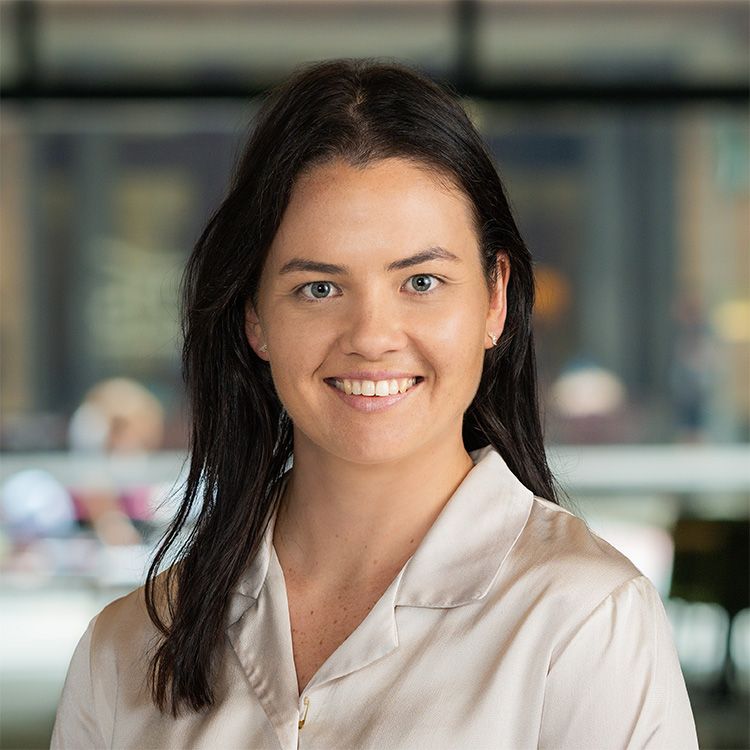
As Chief Operating Officer, Shelby’s day-to-day sees her looking after critical processes of the organisation. With a background spanning marketing and operational roles within the business, Shelby is a powerhouse of all things GPS. Her pride and joy though, is being Fund Mum to her brainchild, Arkus. Arkus is the no jargon, hyper flexible, give-everyone-a-fair-go Fund recently launched by GPS that is tipping investing on its head. You will most likely find Shelby putting her Advanced Masters in Marketing and International Business from UQ to good use by filming Fun with Flipcharts for the Arkus Instagram page, or finding new ways to embarrass herself for the good of educational Arkus content.
View products from GPS Investment Fund Limited