The ETF Innovation Cycle: Why the Next Hot Fund May Warrant Caution

Simon Turner
Wed 13 May 2026 5 minutesWe all know the long list of benefits of investing in ETFs, but the passive fund boom has reached the stage where narratives can sometimes reign supreme. The risk is that the recent wave of ETF launches, particularly in thematic, single-stock, options-enhanced, and actively managed strategies, is partially shaped by investor demand for exposure to recent winners rather than enduring sources of return.
With some thematic ETFs being launched while sentiment and valuations are peaking, this dynamic demands a critical lens from investors.
The Emergence of Mini-Bubbles
The ETF boom has been largely good news for investors in recent years. ETFs provide lower cost, are diversified, and offer generally liquid access to markets, regions, and thematics. It’s been nothing short of revolutionary for individual investors aiming for institutional outcomes.
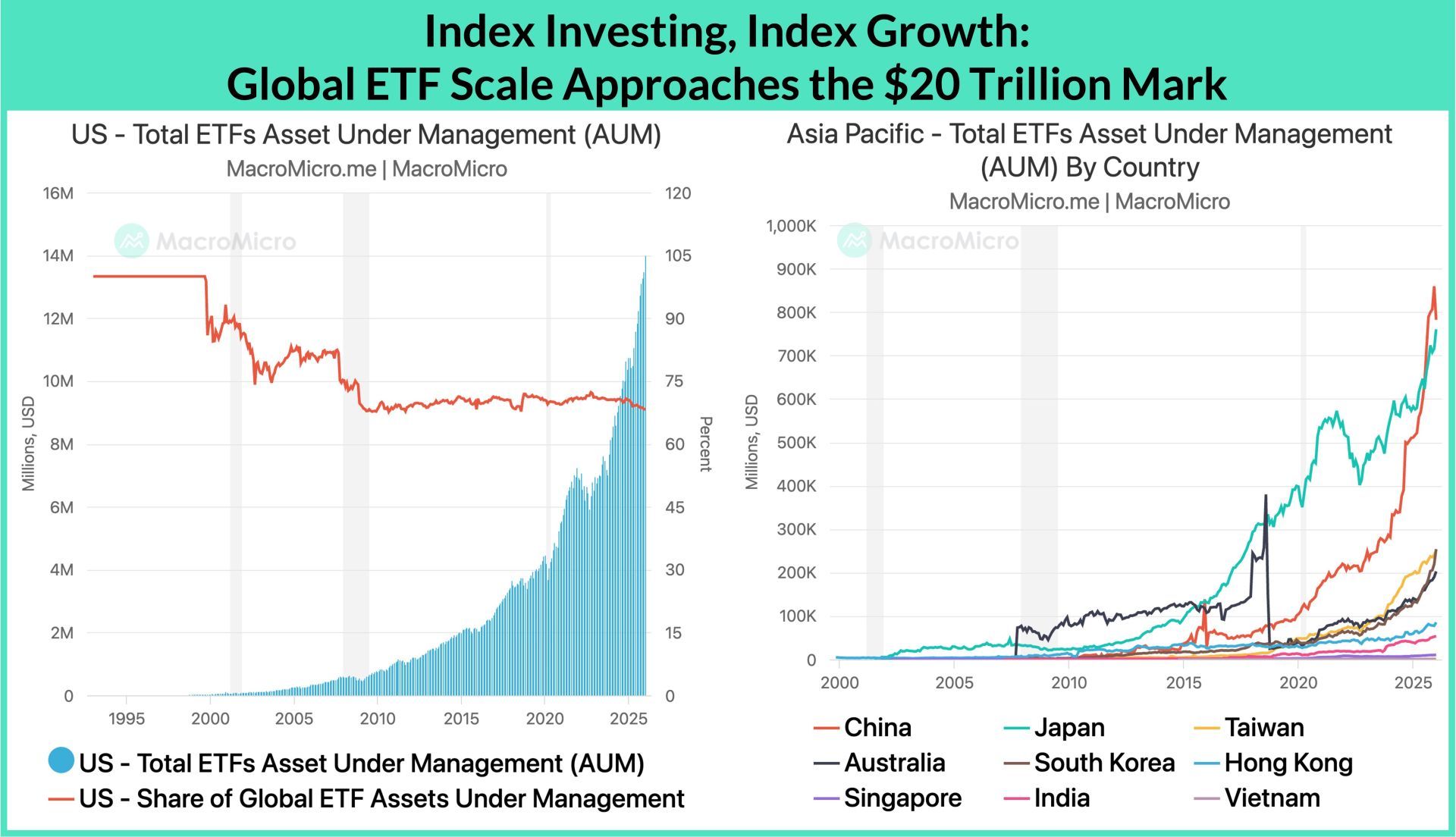
The reason for the ETF industry’s meteoric success is that ETF issuers are acutely aware of the challenges individual investors face. They are also highly responsive to flows, with product development lagging performance cycles by design.
In practical terms, this means that many ETFs are launched only after an underlying theme or asset class has already delivered outsized returns and thus attracted investor interest.
This creates the risk that by the time capital is packaged into an ETF wrapper and distributed to investors, the opportunity may have shifted unfavourably.
The evidence is increasingly difficult to ignore.
In the US, 2024 and 2025 saw a surge in launches targeting AI, semiconductors, and options income strategies. According to Morningstar, thematic ETFs focused on AI and robotics attracted billions in inflows during this period, yet the bulk of these flows occurred after the Nasdaq’s sharp re-rating led by mega-cap technology stocks.
This timing is important to note.
The median AI-themed ETF launch in this cycle came well after the initial rally in companies such as Nvidia, at a point where forward earnings expectations had already been aggressively revised upwards.
This pattern is not confined to equities.
Options-based ETFs, particularly those employing covered call overlays on high-growth indices, have proliferated of late, driven by demand for income in a higher rate environment.
Yet the underlying assets are often poorly understood by individual investors who are new to the strategy. In particular, not all investors understand that the yield generated by selling call options is effectively funded by capping upside participation.
So, when these types of strategies are launched during periods of elevated volatility and strong equity momentum, they may systematically underperform the broader market.
The key takeaway is that ETFs provide access to an existing opportunity rather than create value.
The timing of that access, however, is determined by issuer incentives and investor demand.
ETF providers, operating in a competitive landscape, are incentivised to launch products that are likely to gather assets quickly. This typically means aligning new funds with prevailing narratives.
The result is a supply chain of investment products that amplifies momentum rather than challenges it.
Even back in 2022, Morningstar research highlighted that retail flows into thematic funds tend to be performance chasing, with investors allocating capital after strong returns rather than before them.
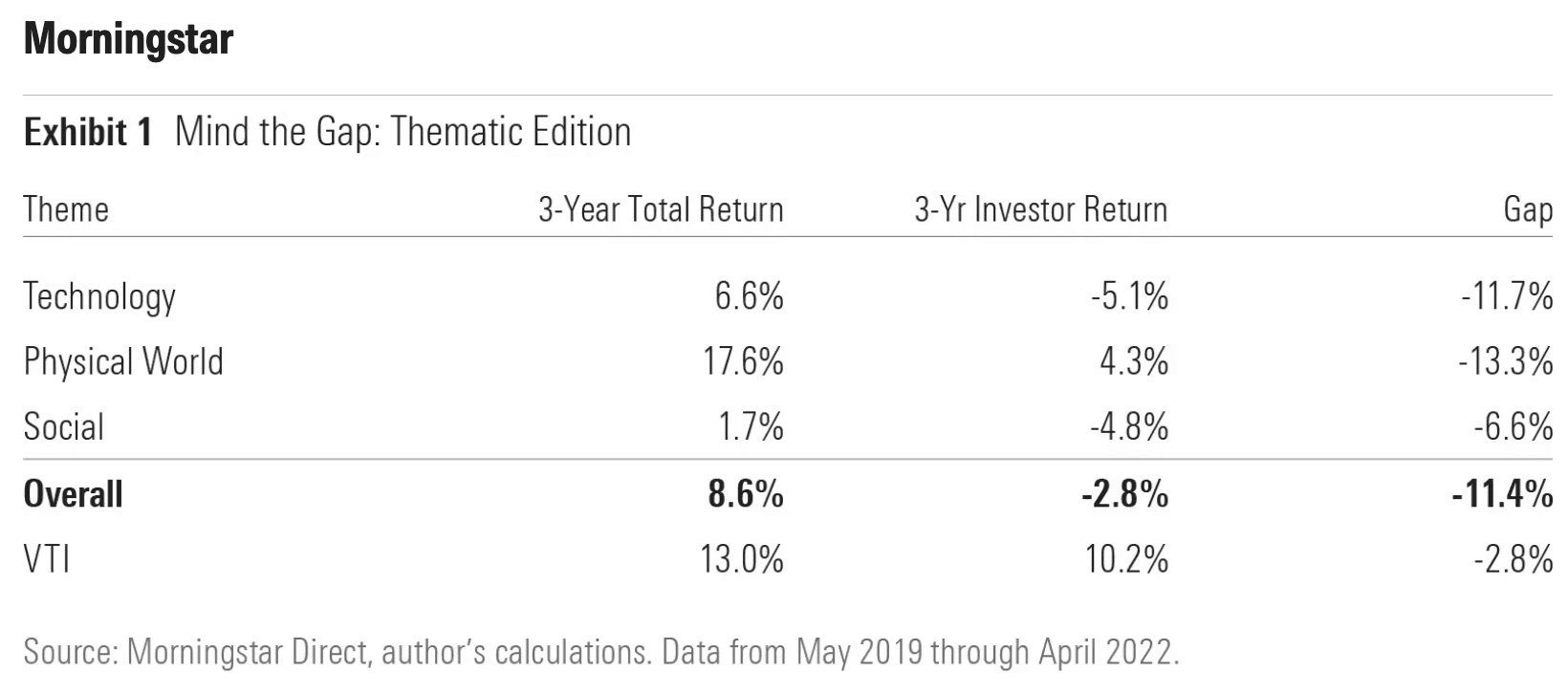
This behaviour is associated with lower subsequent returns, as valuation expansion is rarely sustainable.
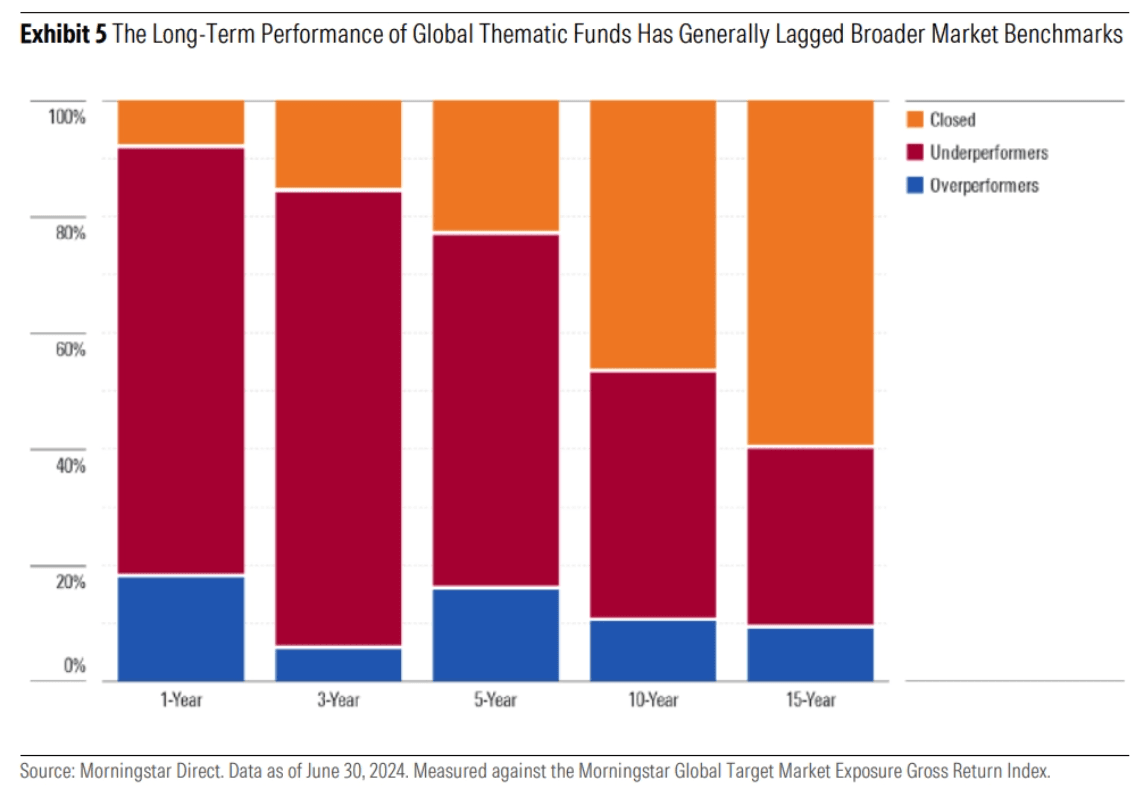
Morningstar data reinforces this point, indicating that thematic ETFs, on average, underperform broad market indices over longer horizons despite periods of short-term outperformance.
Explore 100's of investment opportunities and find your next hidden gem!
Search and compare a purposely broad range of investments and connect directly with product issuers.
Investor Takeaways
ETF innovation has clearly been a good thing for investors.
It has materially improved market access, reduced costs, and enabled more precise portfolio construction.
The challenge lies in distinguishing between the industry’s structural innovation and cyclical enthusiasm.
A thematic ETF launched to capture a multi-decade shift in energy transition or demographic change may offer genuine diversification and performance benefits.
A product designed to monetise the latest surge in a narrow segment of the market is more likely to reflect short-term sentiment than long-term fundamentals.
Of course, the million-dollar question is how do you differentiate one from another?
For starters, it’s prudent to assess new ETF launches with a critical eye on the strategy, the timing of the launch, and the narrative context.
Ask yourself: Is this a hot theme?
It’s worth delving into the data behind the narrative. Look into the valuation metrics, earnings expectations, and macroeconomic drivers associated with the thematic.
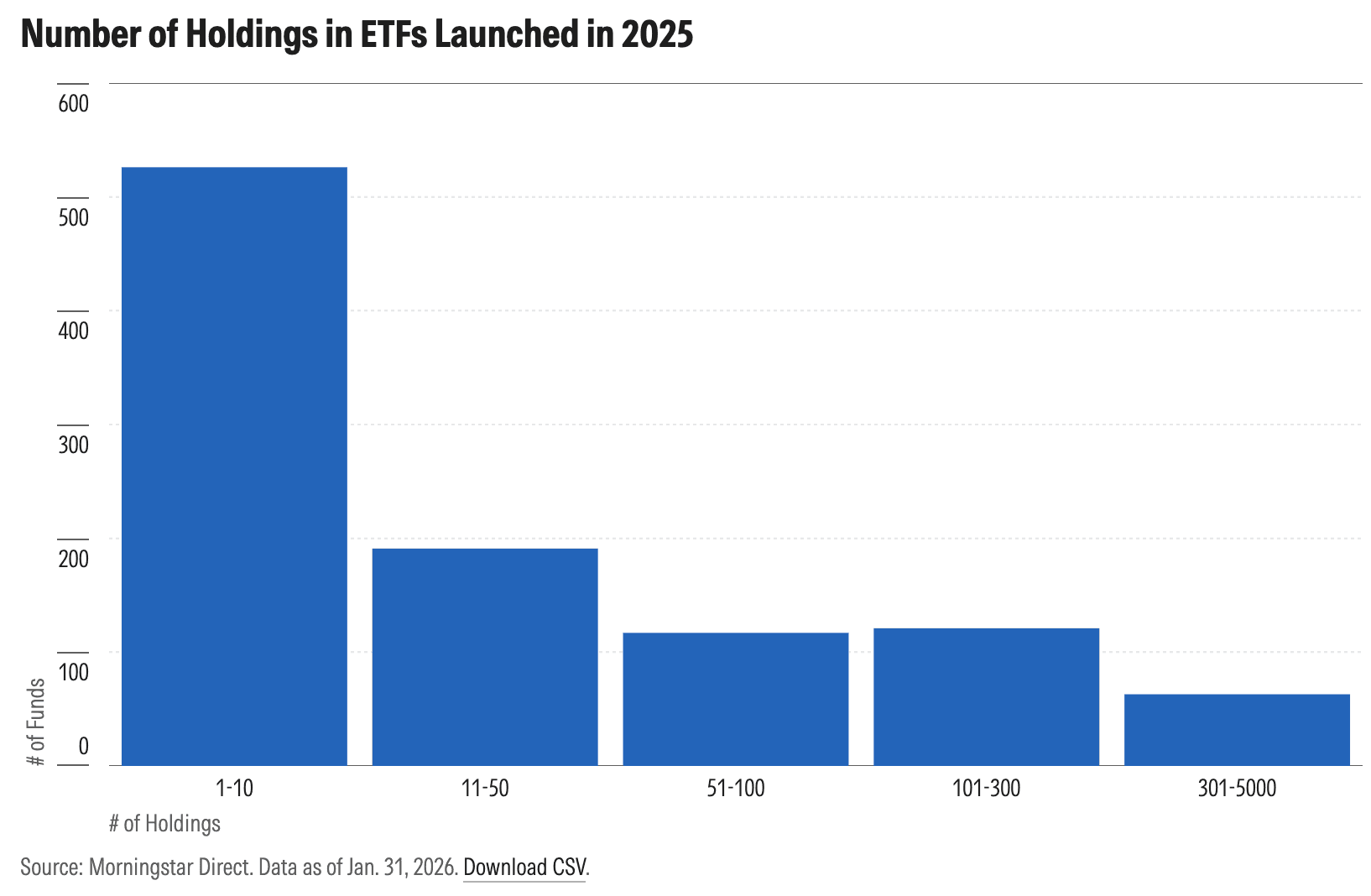
Also, hone in on the top ten positions, which often represent well over 50% of a thematic ETF (see below). Check their recent performance. Have they just doubled in value? Or, are they in a gradual long-term uptrend?
Finally, gauge sentiment. Are investors excited about the thematic? Or, is it a boring, structural investment case like healthcare that’s driven by fundamentals rather than excitement?
With awareness of these angles prior to investment, investors are well-armed to sort the genuine opportunities from the overvalued ones.
Subscribe to InvestmentMarkets for weekly investment insights and opportunities and get content like this straight into your inbox.
Do Your Own Research
The boom in the number of thematic ETFs has made markets more accessible, but not necessarily easier to navigate. In a landscape where product innovation often follows performance, the burden of correctly timing investment in ETFs has shifted from issuers to investors.
Responding with discipline rather than enthusiasm may be one of the most valuable sources of return available to ETF investors.
Disclaimer: This article is prepared by Simon Turner. It is for educational purposes only. While all reasonable care has been taken by the author in the preparation of this information, the author and InvestmentMarkets (Aust) Pty. Ltd. as publisher take no responsibility for any actions taken based on information contained herein or for any errors or omissions within it. Interested parties should seek independent professional advice prior to acting on any information presented. Please note past performance is not a reliable indicator of future performance.

Simon Turner is an ex-fund manager with 20 years investing experience gained at Bluecrest, Kempen and Singer & Friedlander who now writes educational content about investing and sustainability. He's also the published author of The Connection Game and Secrets of a River Swimmer.