-tocogsj3zy2mt2vfay5i.png)
Super vs Outside Super: The New Maths After Division 296 & the CGT Changes
Super has traditionally been a tax-effective investment vehicle, but with a raft of regulatory changes over the past year, investors may be wondering which structure is the right call for their investments.
The changes in question? Division 296 and the changes to the calculation of capital gains tax (CGT).
For the most part, investors should take the same fundamentals into account when making their decisions, but there is some added maths following the regulatory changes that is helpful to be aware of.
Key Takeaways
- From 1 July 2027, the capital gains tax discount for assets held for more than 12 months will change from 50% to cost base indexation, with a minimum tax rate of 30%. This does not apply to superannuation, which uses a 33% discount and a maximum tax rate of 10%.
- Division 296 applies an additional tax on earnings attributed to the portion of a total superannuation balance above $3 million.
- The CGT changes have made superannuation more appealing for some investors on higher marginal tax rates using high-growth investments, while investing outside superannuation may be more appealing for lower-growth investments.
- While some investors may focus on tax outcomes, investors should factor in their goals, when they need to access their money, their strategy and whether an asset can be held in the investment structure as part of their decision. Many investors use both super and portfolios outside superannuation.
What are the Changes to CGT?
The calculation of CGT – the tax on any gain you make when you sell an asset – has differed depending on whether the asset was held inside or outside super.
Under the current rules, a discount is applied to the tax on any gain from an asset you have held for more than 12 months before selling. Outside superannuation, this discount is 50%, meaning a maximum effective rate of 23.5% (based on the top marginal tax rate). Inside superannuation, the discount is 33%, resulting in a maximum rate of 10% on non-property assets.
The new rules only affect assets held outside super – the 33% discount still applies within superannuation. Your primary residence, personal use assets and collectables are also exempt from the new rules.
The new rules apply to any capital gains on your assets from 1 July 2027. Under the new rules, capital gains tax on assets held for more than 12 months is based on cost base indexation, with a minimum tax rate of 30% on capital gains. This means inflation is factored in to determine your real capital gain – if inflation was 3% and your asset grew 3% in value over that period, you didn’t actually make a real capital gain.
Gains made before 1 July 2027 are still taxed under the 50% CGT discount rule; the new rule applies to gains made after this date.
In some circumstances, this may mean you pay less tax than you otherwise would have. In others, you may pay more than under the old rules – it comes down to the asset’s growth and inflation during the period of ownership.
For investments in new residential properties, investors can choose between the current 50% CGT discount and the new framework of indexation with a minimum 30% tax rate on the resulting capital gain.
Explore 100s of investment opportunities and find your next hidden gem!
Search and compare a purposely broad range of investments and connect directly with product issuers.
Division 296 Affects Higher Total Superannuation Balances
Division 296 applies to those with higher total superannuation balances and is an additional tax on earnings. For total superannuation balances between $3 million and $10 million, there is an additional 15% tax on the earnings (dividends, interest, rent and realised capital gains) attributed to the balance above $3 million. This brings the tax rate on that proportion of earnings to 30%. For balances above $10 million, there is a further 10% tax on the earnings attributed to the balance above $10 million, meaning a total rate of 40% on that portion of earnings. While limited recourse borrowing arrangements typically form part of your total superannuation balance, they are not counted in the tally for Division 296.
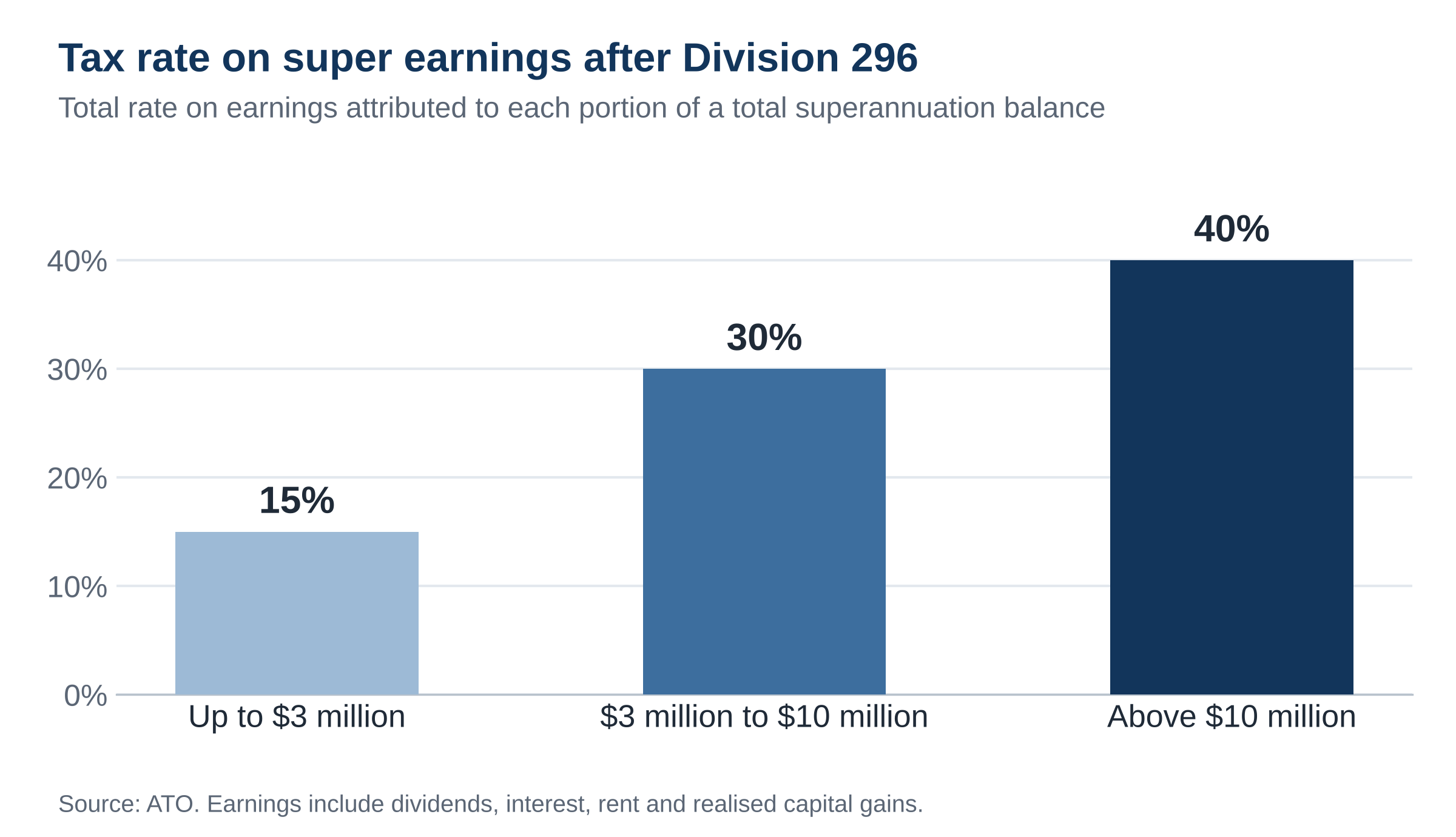
Figure 1: Total tax rate on superannuation earnings by portion of total superannuation balance under Division 296.
To demonstrate how this works in practice, consider a total superannuation balance of $3.5 million and earnings of $50,000.
The proportion of the superannuation balance above the threshold is 14.29%, meaning the earnings attributed to that portion are $50,000 × 14.29% = $7,145.
The tax on earnings would be calculated as follows:
Division 296 worked example: $3.5 million balance, $50,000 earnings | |
$50,000 × 15% | $7,500.00 |
$7,145 × 15% | $1,071.75 |
Total tax paid | $8,571.75 |
Effective tax rate | 17.14% |
By contrast, if those earnings were made outside superannuation by an investor on the top marginal tax rate of 45% plus the 2% Medicare levy, the tax on those earnings would be up to $23,500 (assuming no other deductions).
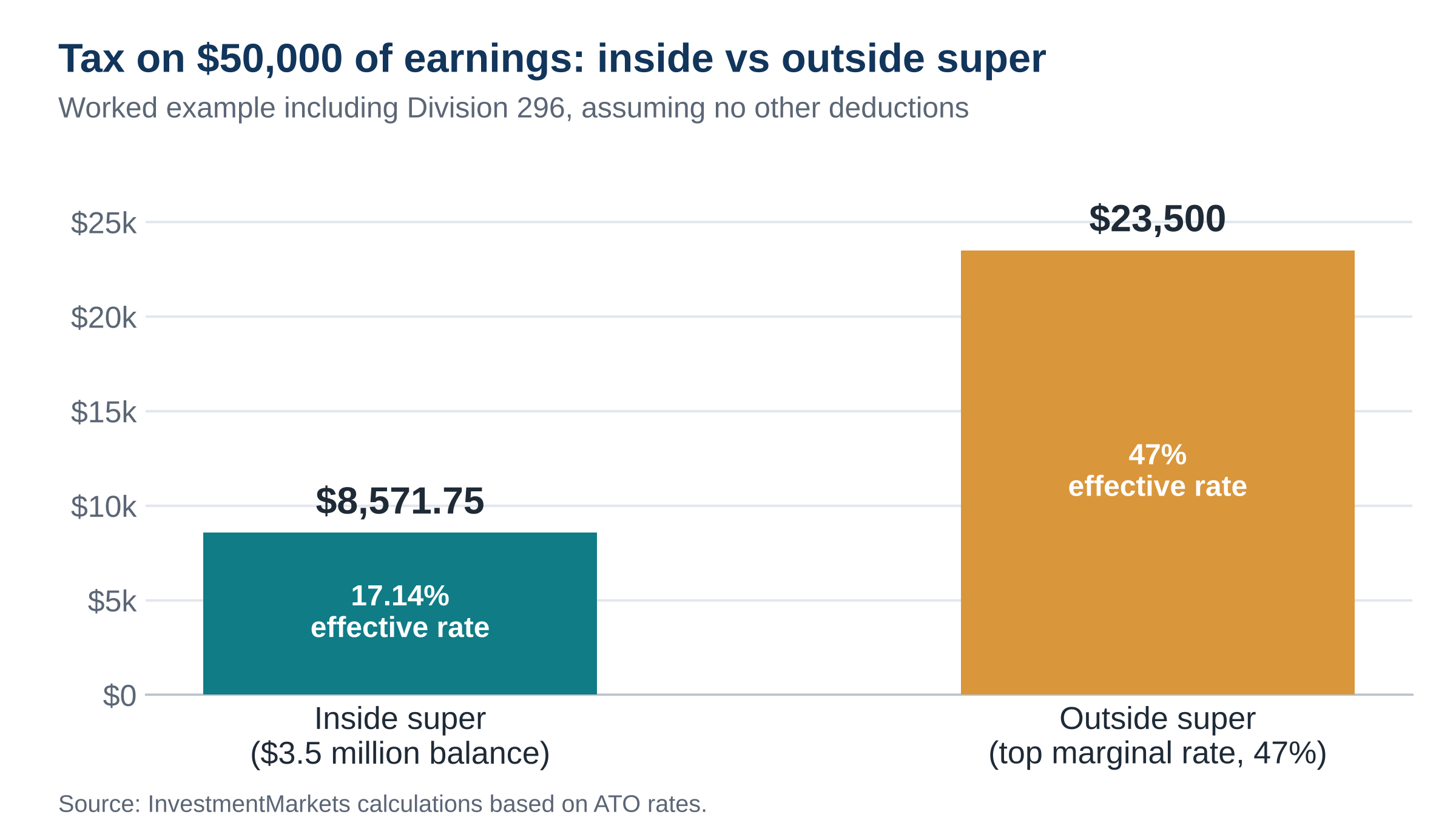
Figure 2: Tax on $50,000 of earnings inside super (including Division 296) compared with outside super at the top marginal tax rate.
Some investors have considered other structures for their investments, such as trusts or investment bonds, also noting contribution caps. These also have their own tax implications. Others have looked at balances across partners and contribution splitting to factor in overall family outcomes, rather than individual ones.
The Maths: Inside or Outside Superannuation
The CGT changes have made superannuation a more appealing environment for investors on higher marginal tax rates to house high-growth assets, such as equities. This doesn’t necessarily change as a result of Division 296, because the additional tax is not applied to all earnings, just the portion attributed to balances above $3 million and $10 million.
As a simple example, consider the following.
Asset 1 was purchased on 1 July 2027 for $100 and sold for $140 on 2 July 2028. Inflation was 2.5% over this period. The investor is on the top marginal tax rate of 47%.
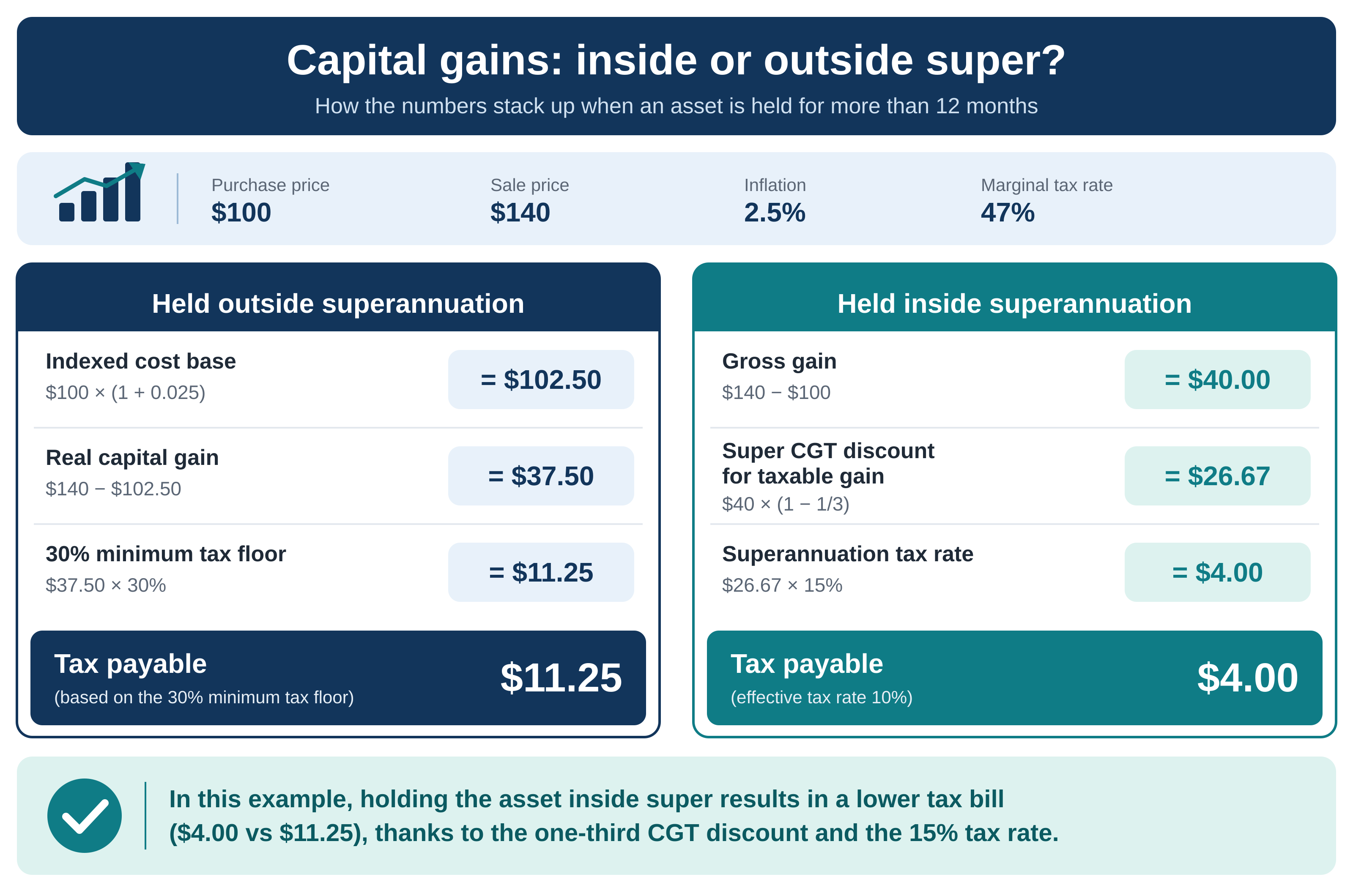
Figure 3: Capital gains tax on the same asset held outside and inside superannuation.
The new rules may mean it can be more tax-effective to hold low-growth assets, such as bonds, outside superannuation. If you applied the example above to a lower-growth investment with the same starting cost that gained only 3%, the tax would be $0.15 if held outside superannuation, compared with $0.30 if held inside superannuation.
Beyond the Maths
While understanding the financial consequences of an investment structure can be useful when deciding where to hold your investments, there is more to the decision.
Ask yourself the following:
- What is my goal for my investments?
- Can the structure I choose actually invest in the asset I want? (For example, you can’t transfer property or collectables into a retail super fund. For an SMSF, certain conditions must be met, and your primary residence can’t be held there.)
- How quickly do I need to access any returns from my investments?
Your answers will help determine which structure best suits your needs.
For example, if you are under 60 and saving for a home deposit to be used in the next five years, investing outside superannuation will offer you flexibility and access, because you can’t access your superannuation savings until you reach your preservation age. If you are investing for a long-term retirement income goal, are under 60 and don’t need to access the money, superannuation may be better suited, as your money can take advantage of compounding in a tax-effective environment.
A simple decision tree you can use is shown below:
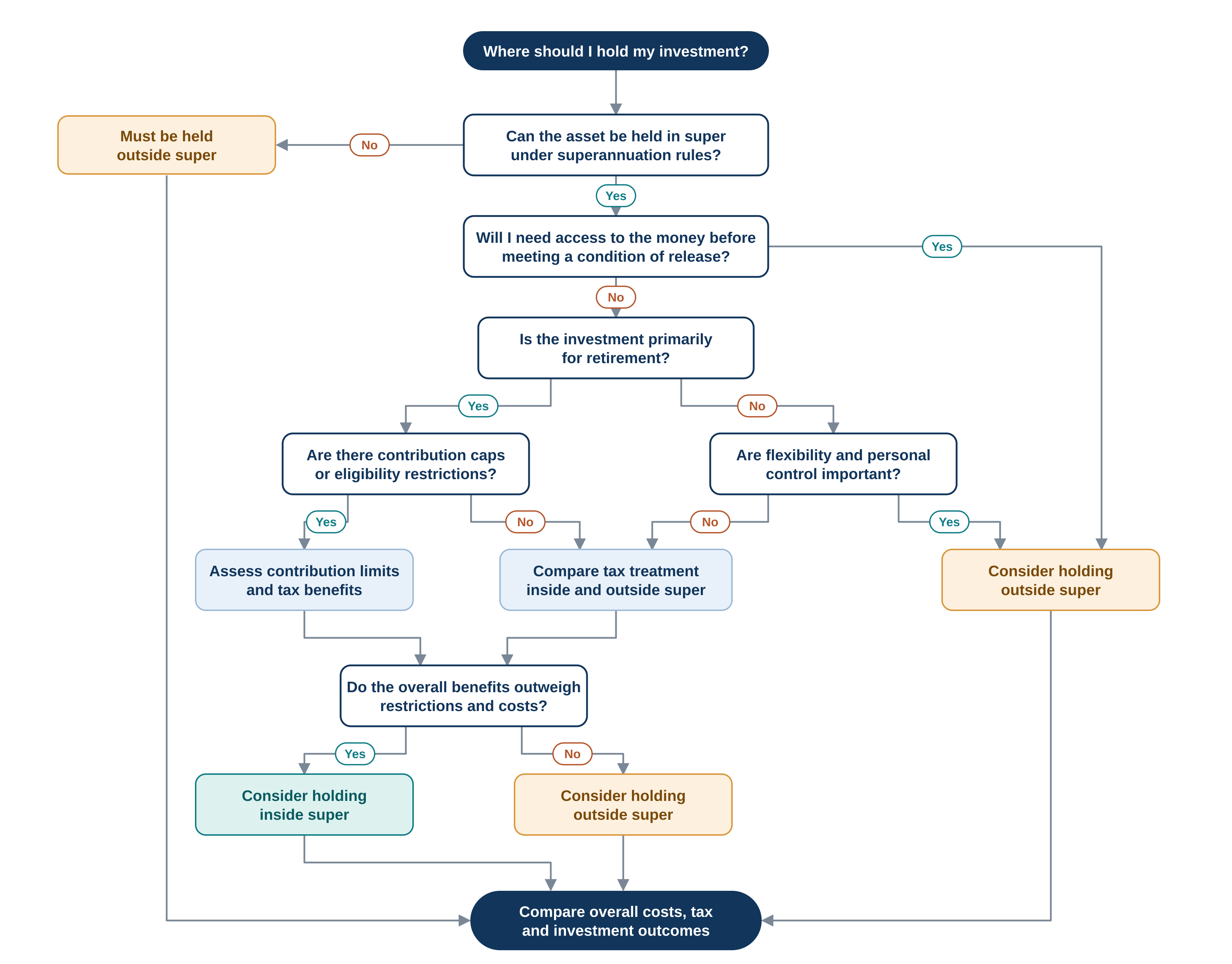
Figure 4: A simple decision tree for choosing whether to hold an investment inside or outside superannuation.
Subscribe to InvestmentMarkets for weekly investment insights and opportunities and get content like this straight into your inbox.
Making the Decision: Super vs Outside Super
The changes to CGT and the introduction of Division 296 may have shifted the maths on investment returns, but the fundamentals of investing, and where to invest, haven’t necessarily changed. Remember that the changes don’t necessarily mean better or worse outcomes from your existing approach, but they are valuable to understand as part of your overall strategy and choices.
At the end of the day, the right structure will depend on your needs, goals, circumstances and strategy. For many investors, this may mean investing both inside and outside superannuation, regardless of tax outcomes, to ensure flexibility. As part of any investments you make, and to ensure you pay the correct amount of tax, stay on top of the latest tax rules at ato.gov.au.
Remember, regulations and policies can change over time, so it is not always best practice to make investment decisions purely on this basis. Instead, think across your strategy and needs, with expert advice if needed.
Frequently Asked Questions
What are the changes to CGT?
Under the current rules, a 50% CGT discount applies to assets held for more than 12 months. From 1 July 2027, capital gains will instead be calculated using cost base indexation and a minimum tax rate of 30%. You can read more at ato.gov.au.
What is Division 296?
Division 296 is an additional tax that applies to investors with total superannuation balances above $3 million.
For total superannuation balances between $3 million and $10 million, there is an additional 15% tax on the earnings (dividends, interest, rent and realised capital gains) attributed to the balance above $3 million. This brings the tax rate on that proportion of earnings to 30%.
For balances above $10 million, there is a further 10% tax on the earnings attributed to the balance above $10 million, meaning a total rate of 40% on that portion of earnings. While limited recourse borrowing arrangements typically form part of your total superannuation balance, they are not counted in the tally for Division 296.
You can read more at ato.gov.au.
What do the changes mean for whether I use superannuation for my investments?
Superannuation is generally a tax-effective environment, but it offers less flexibility because of restrictions on accessing your money before preservation age. The CGT changes may make superannuation more appealing for high-growth assets for some investors on higher marginal tax rates, but this can vary based on the assets chosen and your individual circumstances and strategy.
When it comes to Division 296, some investors have also considered alternative structures outside superannuation that pay internal tax, or have considered contribution splitting and balancing between spouses to factor in overall family outcomes rather than individual ones. Assessing these can be complicated and is unique to your situation, and expert advice can help you understand the implications of your decisions.
Investors should remember that decisions about where to invest should ideally consider your circumstances, needs and goals as a whole, rather than focusing on policies at a particular point in time (which can change).
Disclaimer: This article is prepared by Sara Allan. It is for educational purposes only. While all reasonable care has been taken by the author in the preparation of this information, the author and InvestmentMarkets (Aust) Pty. Ltd. as publisher take no responsibility for any actions taken based on information contained herein or for any errors or omissions within it. Interested parties should seek independent professional advice prior to acting on any information presented. Please note past performance is not a reliable indicator of future performance.
Author

Sara Allen
InvestmentMarkets
Related Articles
-62itb6ivjyp6irexulrl.png)
-jadpty6yyvte3cbjel3k.png)
Recent Articles
View all articles-8uexkx4bnscs7ze3rtpw.png)
-0xx59tid6lwcl8n1yune.png)
-fhj5k3hgisum3hd4zzq3.png)